BOMB
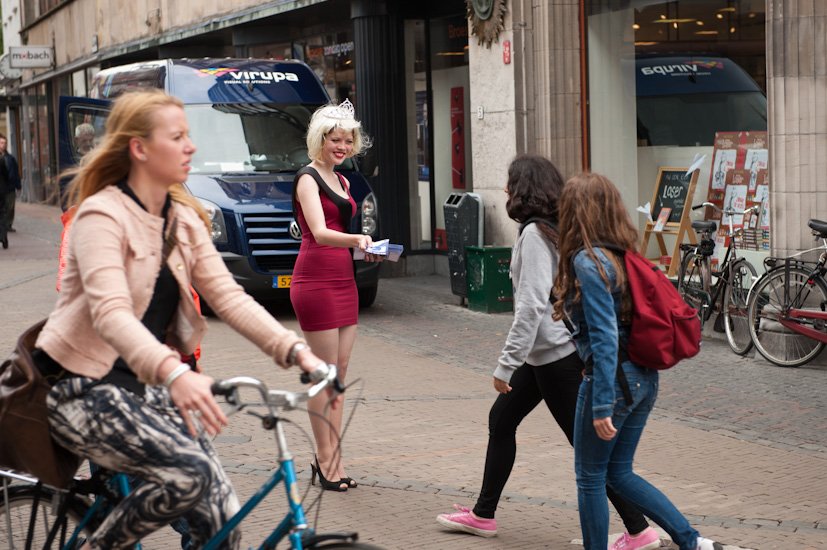
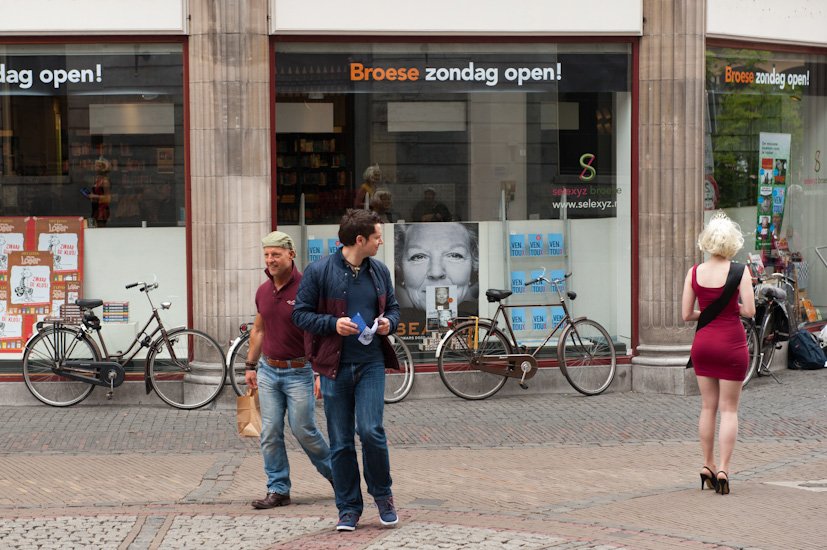
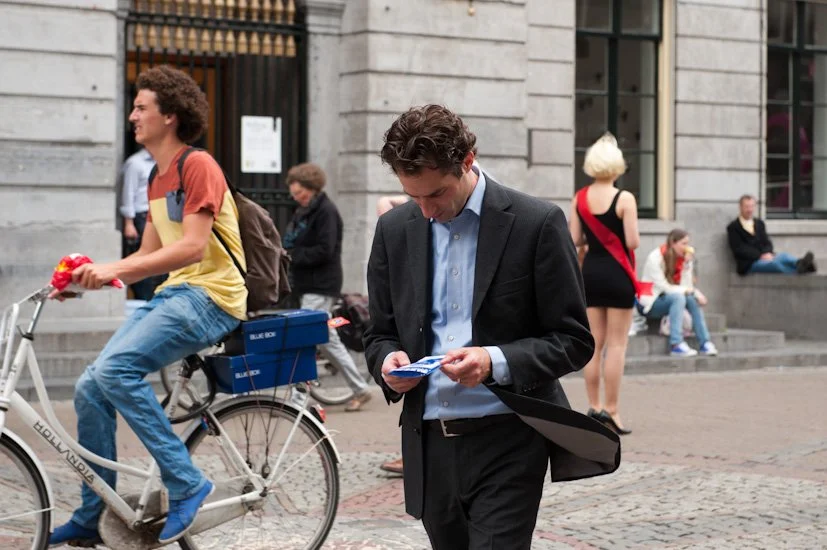
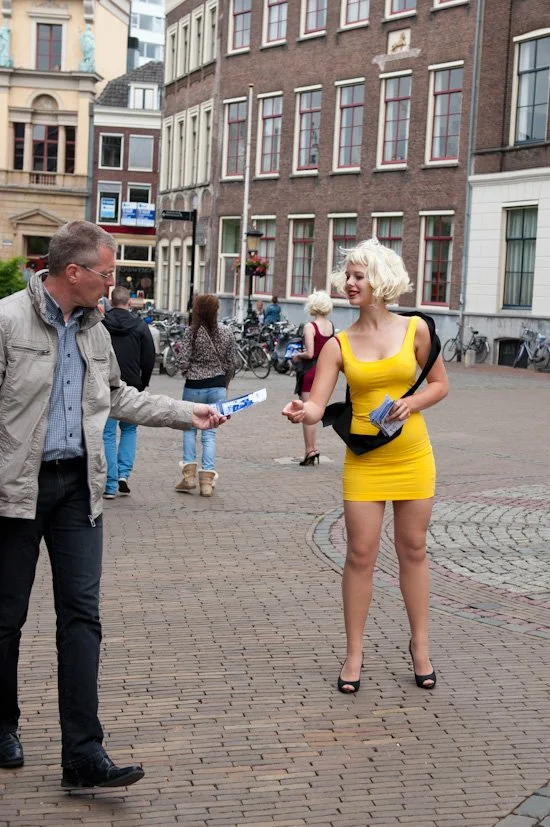
INSTALLATIONS & PERFORMANCES · 2013 · ABORIGINAL ART MUSEUM, UTRECHT · WITH BLAK DOUGLAS (AKA ADAM HILL)
BOMB shakes things up and reveals the raw reality With BOMB, the AAMU presents contemporary art, installations, and performances by Adam Hill and Adam Geczy.
Hill and Geczy are two Australian artists, one of Aboriginal descent (Hill) and the other of European-Australian descent (Geczy). The BOMB project is organized within the framework of and in conjunction with the celebration of the Peace of Utrecht. This celebration takes place to commemorate that 300 years ago, a treaty was signed in Utrecht that put an end to a series of international conflicts. The powers that signed a peace treaty in Utrecht were simultaneously waging colonial wars in other parts of the world, and in the centuries that followed.
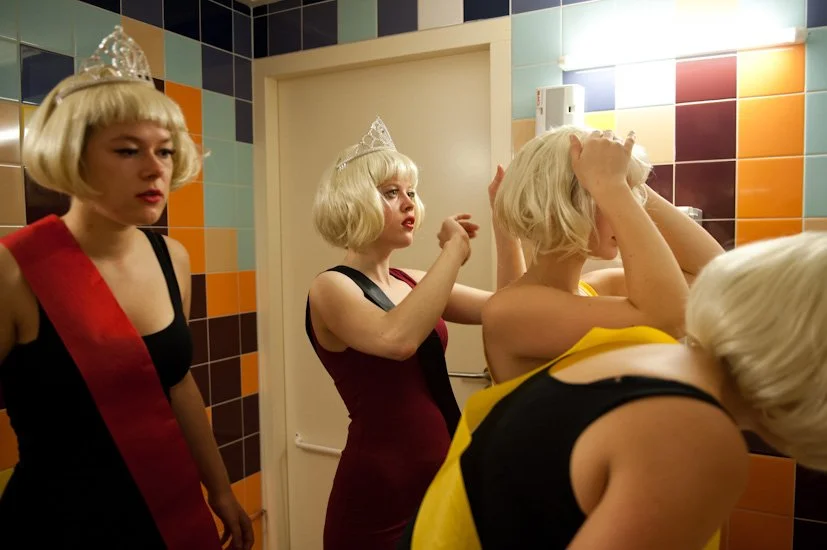
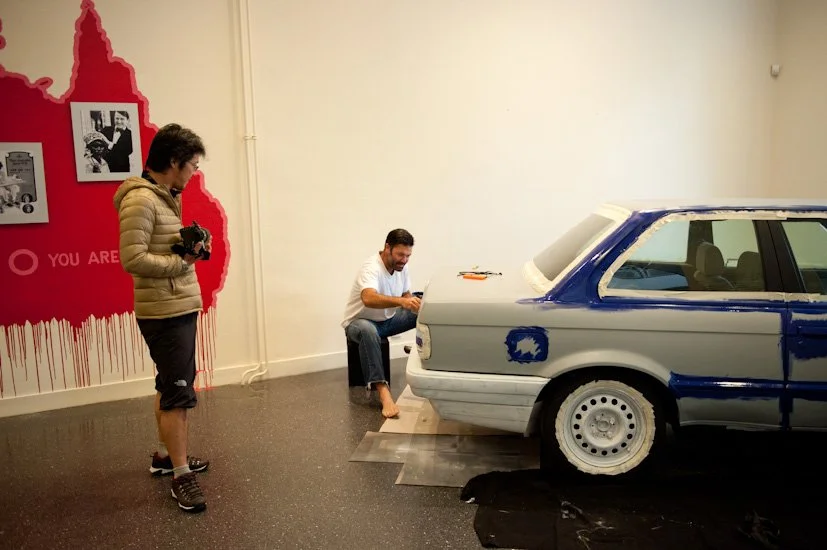
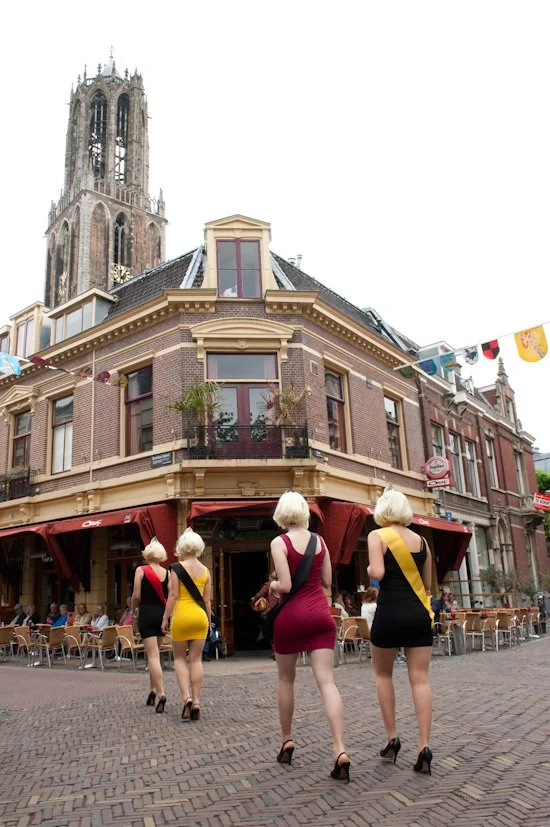
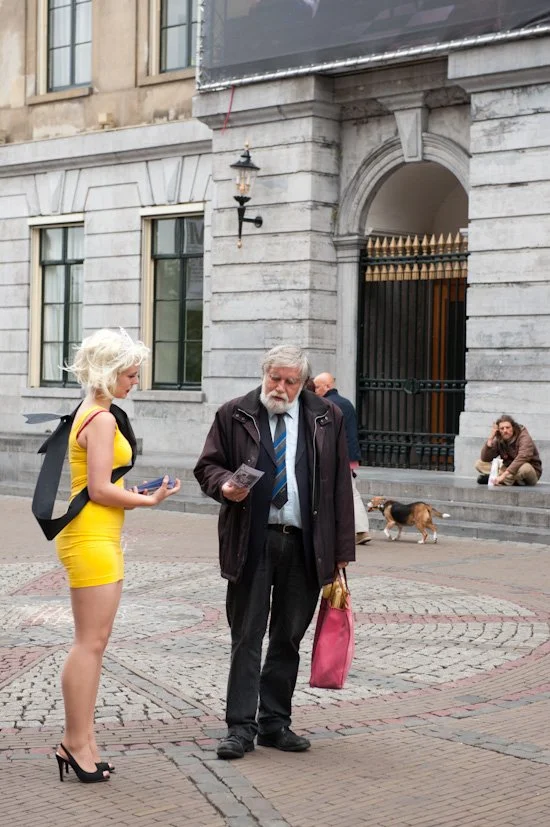
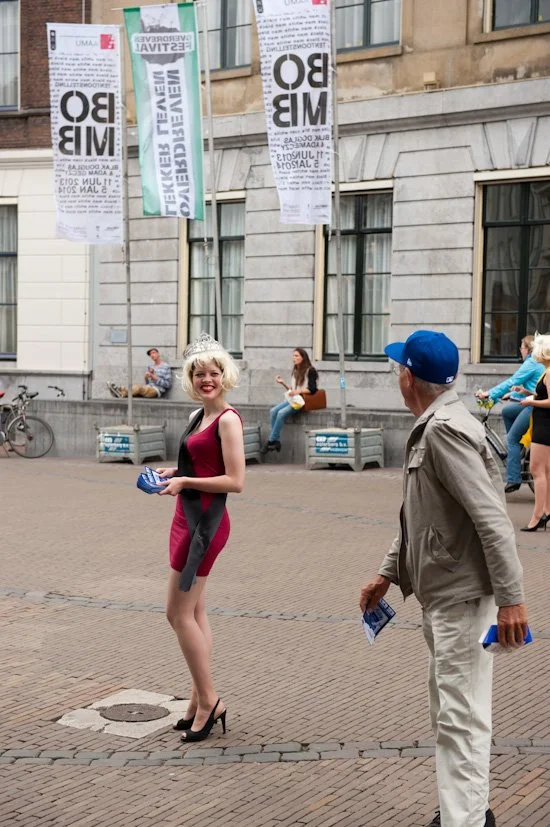
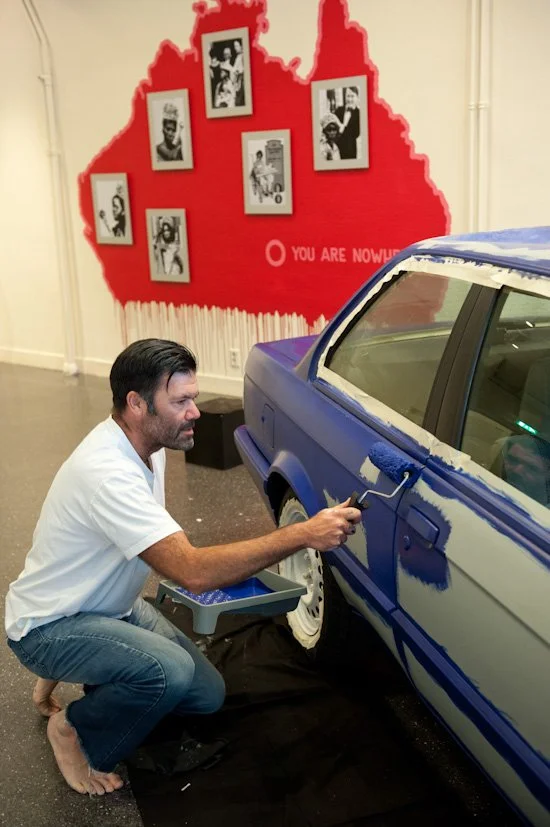
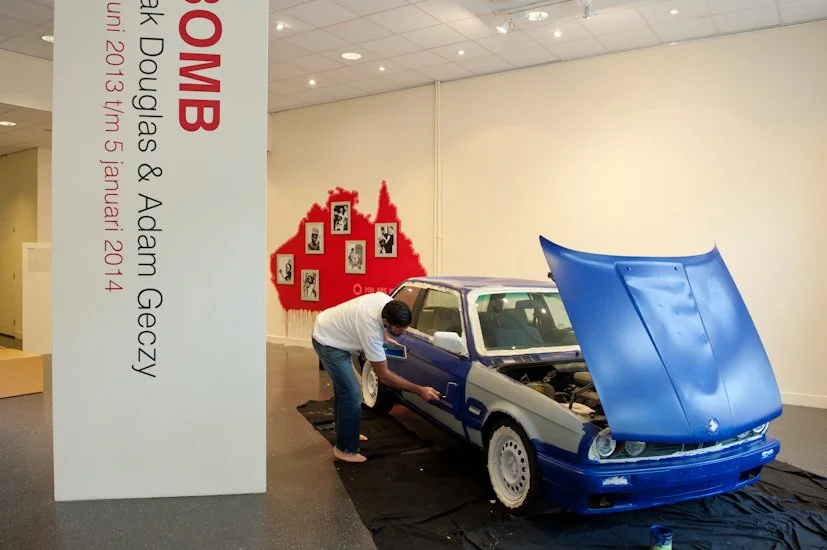
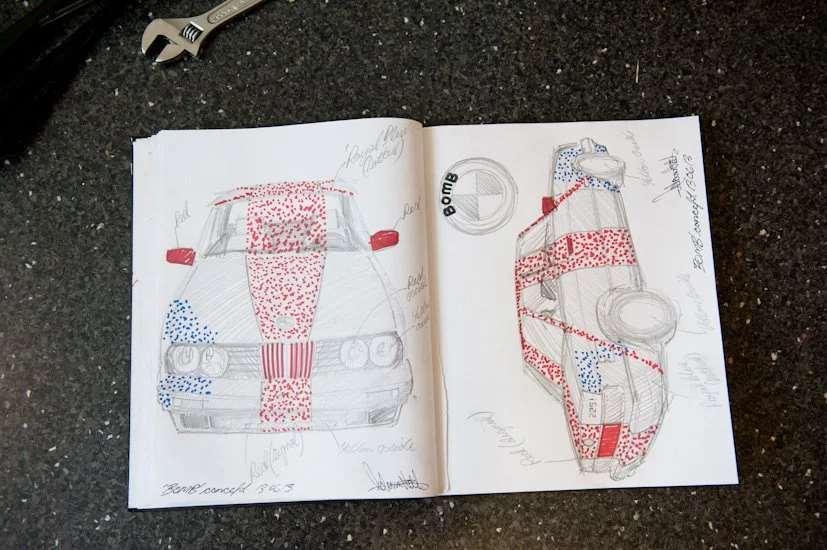
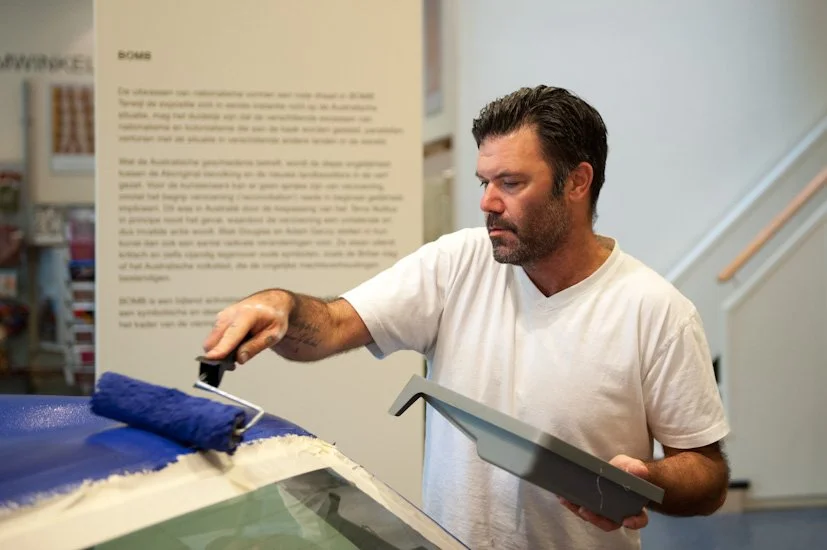
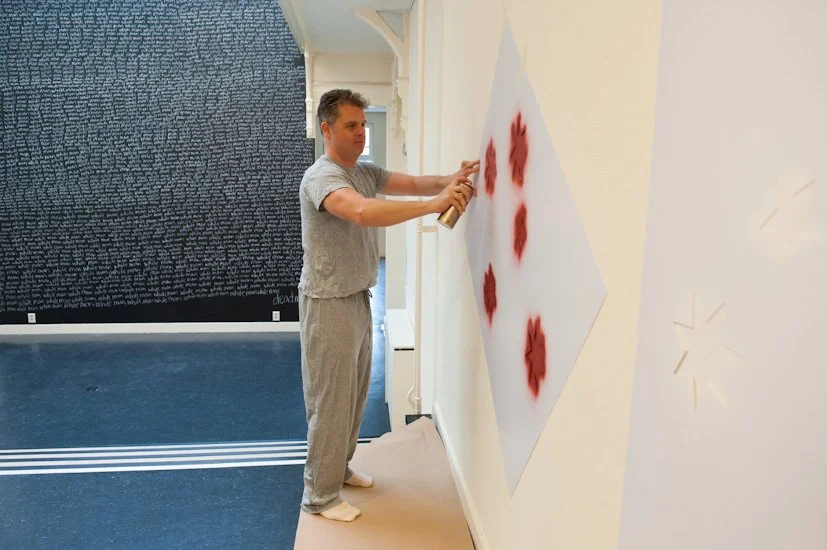
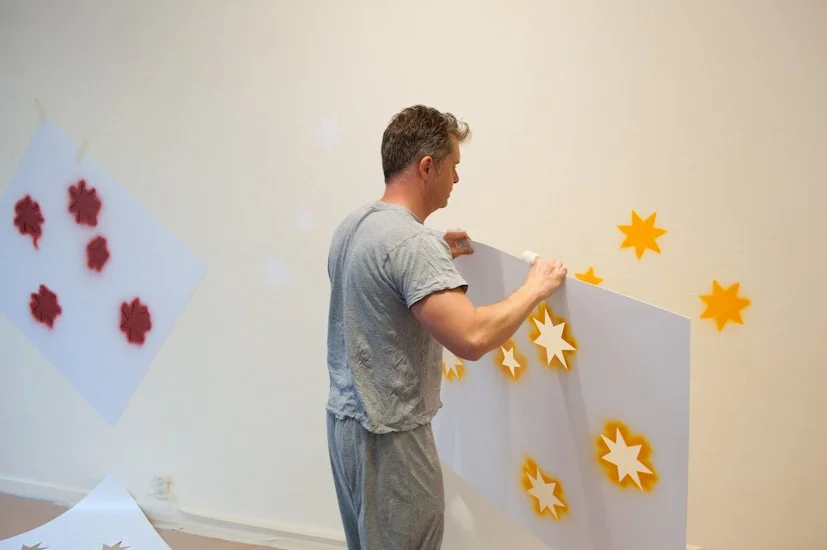
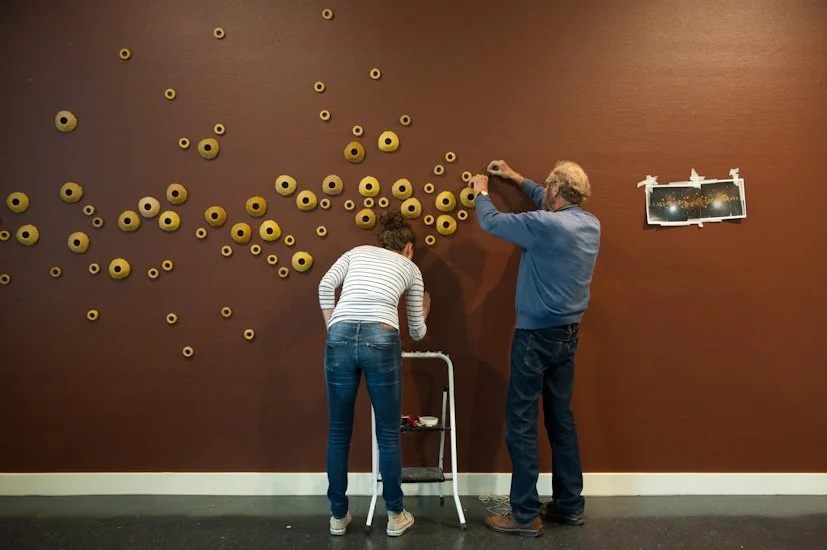
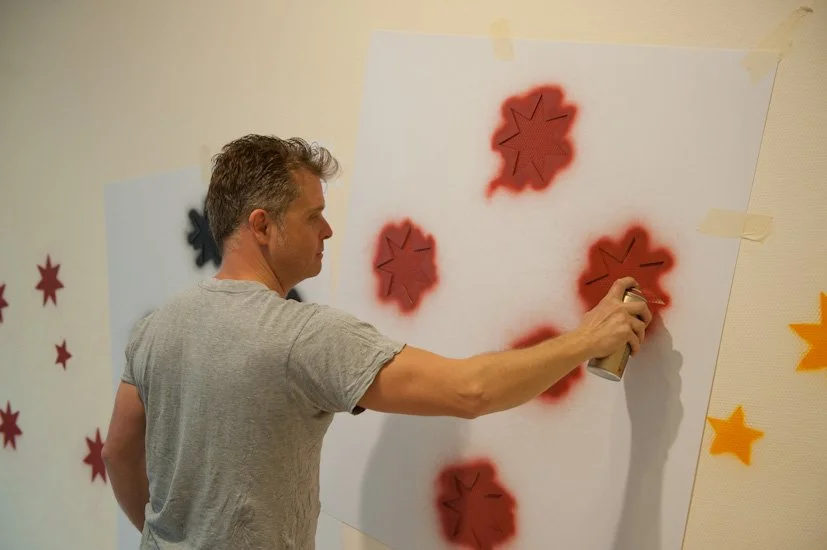
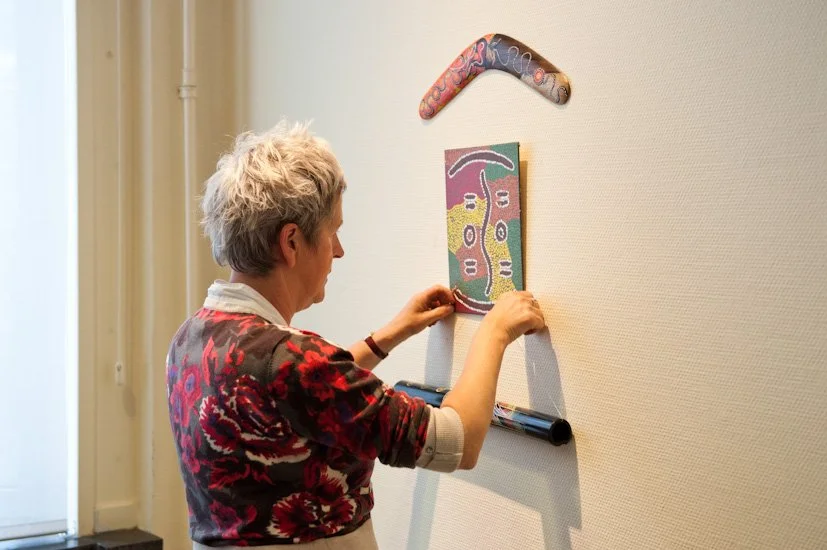
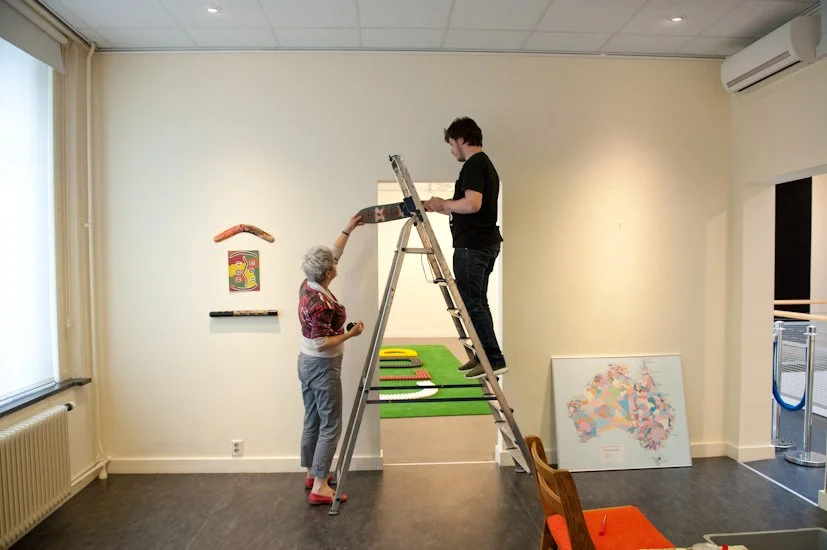
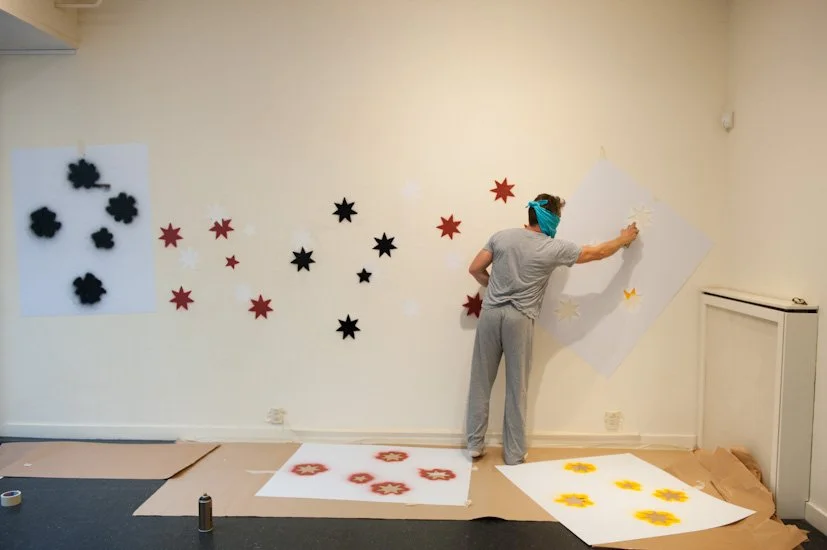
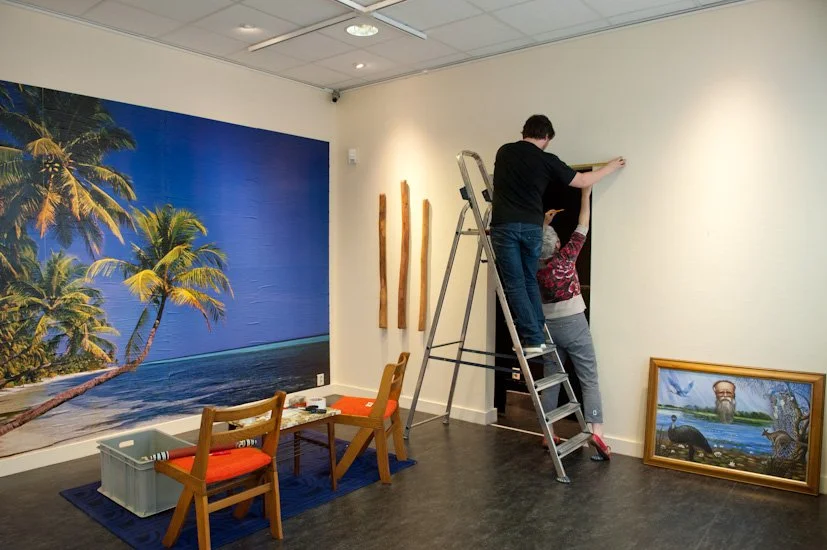
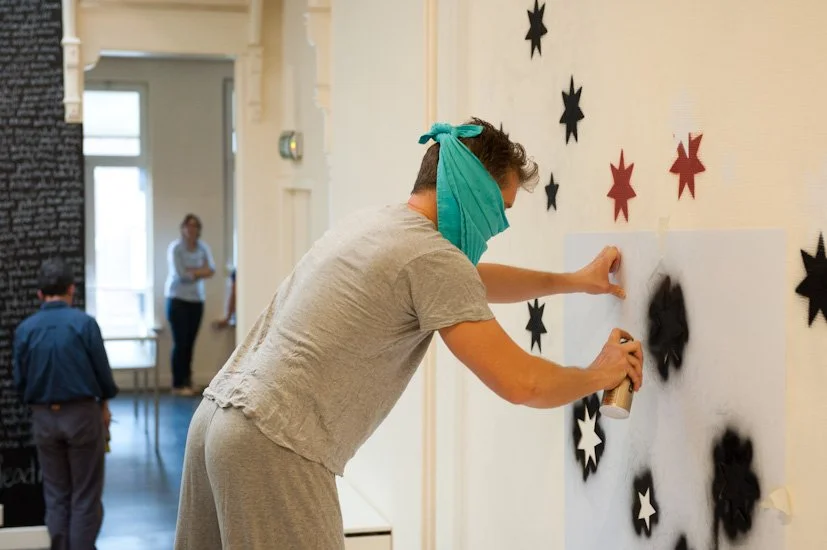
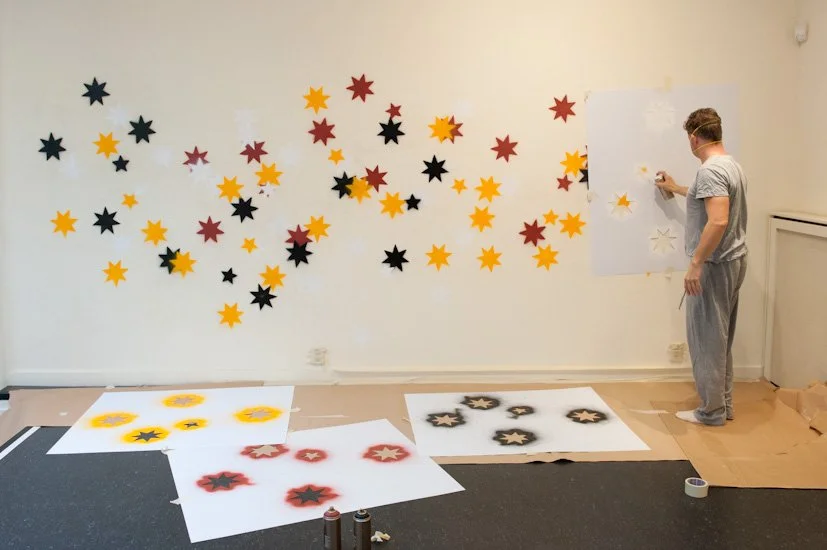
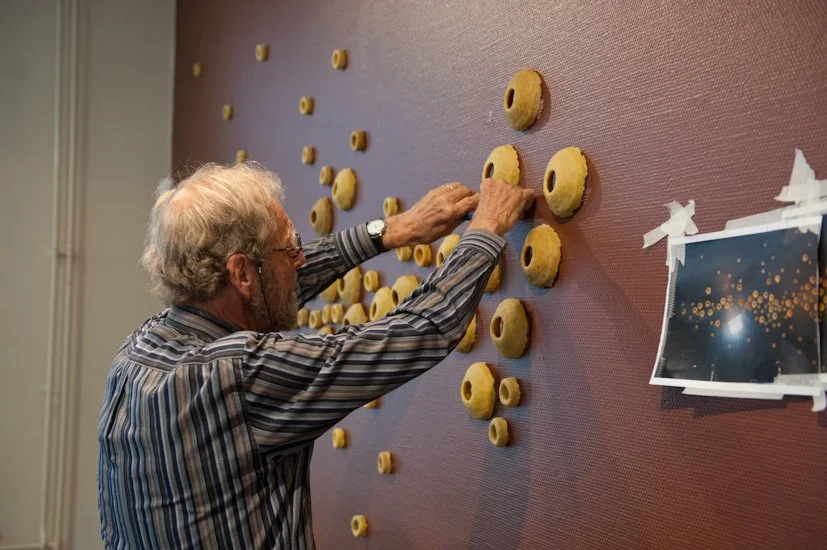
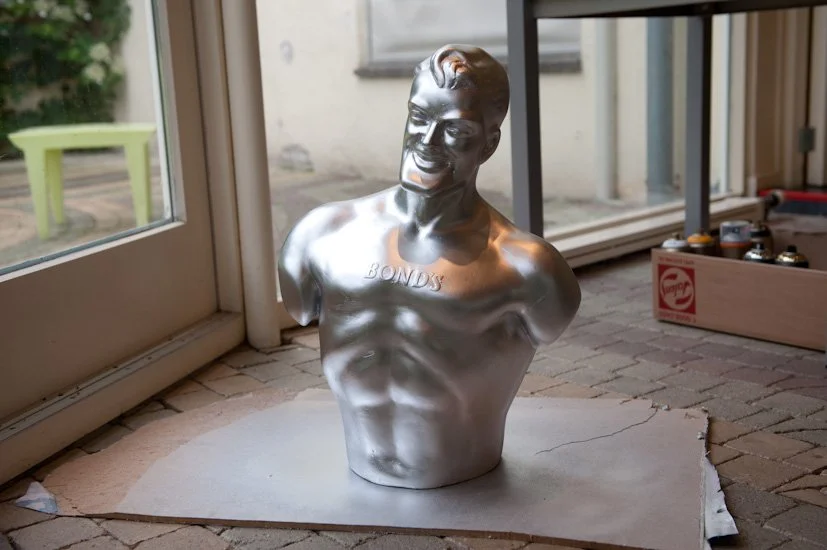
This fact forms the basis for the BOMB exhibition. In this exhibition, the artists take the colonization of Australia as their starting point. They refer to the historical past and the political present. They highlight the negative effects of extreme nationalism and explicit racism on the Aboriginal people. The exhibition makes use of video, photography, painting, sculpture, installation, and performance. The exhibition challenges visitors, in an activist way, to take a stand and reflect on themes such as racism and nationalism. The artists, both of whom have won many art prizes and have been working together for about five years, use different names when creating and presenting the exhibition. Adam Hill calls himself The Blak Douglas and Adam Geczy calls himself Yaama, Goodbye. The two work extensively with contrasts. For example, they show cheerful images accompanied by horrific texts. This is not art to simply ‘take a quick look at’. Adam Hill: ‘It is very ‘in your face’, yes. And that is exactly right.’ He calls BOMB an artistic exhibition with a striking collection of objects. The artists provoke, deliberately, in order to spark a profound discussion.
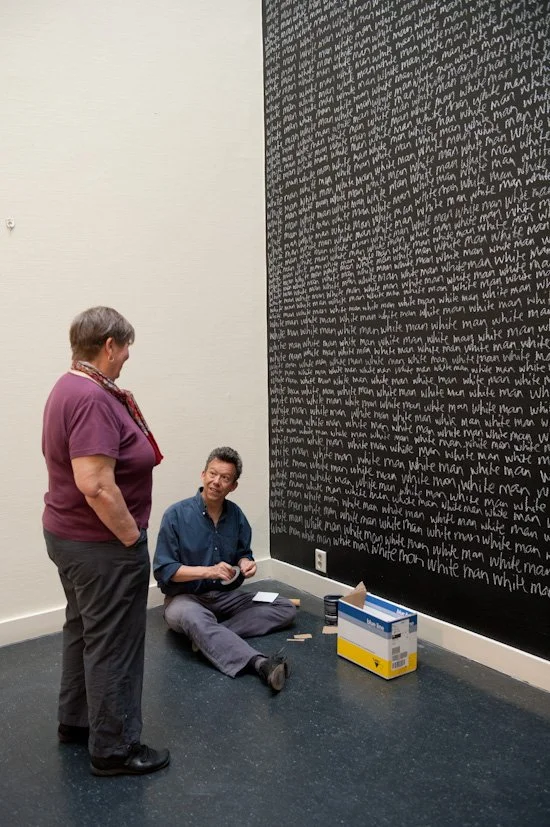
Hill: ‘BOMB is not afraid of tar and feathers, and will discuss the dire situation of the Aboriginal people in Australia with poignant texts and images.’ Fel: ‘We cannot stand living among an ever-growing flock of sheep. The Australian rednecks look down on Aboriginal people and just parrot each other.’ It seems as if the people around us are behaving like teenagers throwing a party while their parents are away. Bad, uncontrolled, thoughtless. It is frustrating to live on an island that some people view as the last bastion of the light-skinned Caucasian race. Surely that cannot be right? Something has to change. I hope one day to be able to write with permanent ink on the figurative white wall of the conservative artists in ‘Ausfailure’. I cannot say it often enough. We want to change something, and if that change doesn’t happen on its own, then we have to do something about it—by blowing things up, by shaking things up, by BOMB!
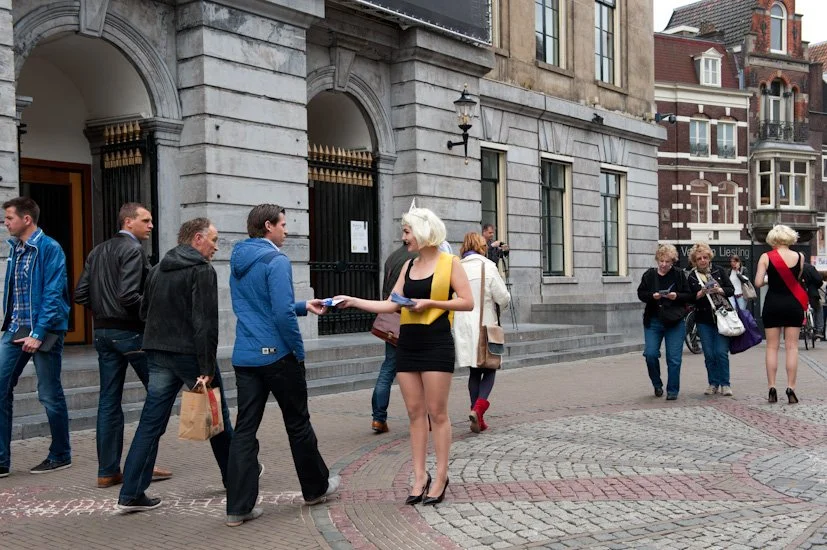
The artists want to focus primarily on the public when they are in Utrecht. They find it interesting that the Peace of Utrecht is being commemorated, but they want nothing to do with fuss or ceremonies. ‘We already have too much of that here in Australia, and it leads nowhere. It is precisely that hypocrisy that I cannot stand. I don’t need to meet the Queen of the Netherlands, or the King, for that matter. I want nothing to do with that. I focus on the common man; the media should do the same. I hope I can guide the journalists a little during the spectacle: focus on who matters! I want as much contact as possible with the people coming to watch and hope that we can change the thinking of many.’
He adds: ‘And we do that in our own way. Not by polishing silver for the elite, not by showing tame works of art; no, we shock and show the raw reality. You have to be able to handle that. But that is simply how it is in real life. That isn't presented with a nice ribbon around it either. It is important enough to look at the things that go wrong, to reflect on what is going wrong. It is our mission, also outside Australia, to paint a true picture of the state of affairs in Aboriginal Australia. An image different from the fantasy image people have of Aboriginals in Australia.’
Context: The BOMB exhibition is framed within the series of exhibitions being organized by the Utrecht museums for the celebration of the Peace of Utrecht. The focus here is on substantive collaboration and joint marketing. As a result, the AAMU will reach a broader audience with this exhibition than it normally does. The BOMB project consists of an exhibition, a number of performances, an educational program, an accompanying program, and a catalogue. The exhibition runs from June 10, 2013, to January 8, 2014.